The core idea: don’t aim for “autonomy”
“If you don’t have a seat at the table, you’re probably on the menu.”
-
If your plant can’t meet new quality, compliance, and delivery expectations, you’ll be treated as interchangeable.
-
If you can standardize execution, prove compliance, and scale know-how across sites, you become a partner the ecosystem depends on.
Four global transitions where Europe must compete
-
Digital and AI (including semiconductors, compute, quantum, and industrial software)
-
Life sciences and biotech (driven by demographics)
-
Energy and climate (driven by resilience and cost)
-
Security (physical, digital, and economic)
The ASML lesson: collaboration wins when trust is operational
-
Transparency between partners
-
Fair risk and reward sharing
-
A single shared objective
The “boundary conditions” Europe must fix (and what it means on the shop floor)
1) Infrastructure: physical and digital
-
Real-time access to the “single source of truth” for procedures
-
Reliable connectivity across lines and sites
-
Data you can trust because it’s captured at the moment of work
2) Talent: educate, reskill, and enable mobility
-
Educate more STEM talent
-
Reskill at massive scale (AI will shift jobs, not only “low-skilled” work)
-
Support talent migration thoughtfully
-
Replace tribal knowledge with structured learning
-
Make training visible and measurable
3) Regulation: simplify without lowering the bar
-
Standardized procedures
-
Consistent evidence capture
-
Audit-ready reporting without heroics
4) Access to capital: fund innovation across the readiness levels
Why this matters right now: productivity funds the society we want
-
Fewer errors and rework
-
Faster changeovers and training
-
Better first-time-right execution
-
Closed-loop continuous improvement
A practical takeaway for plant leaders: become relevant by mastering execution
-
Launch new products and variants without chaos
-
Prove compliance without panic
-
Scale best practices across sites
-
Onboard and reskill workers quickly
And if you’re still relying on paper-based instructions, it’s worth revisiting the foundational question: why work instructions matter.
Re:Manufacture exists to bring manufacturers, operators, and technology leaders together around one shared objective: make industry more resilient, more competitive, and more human.
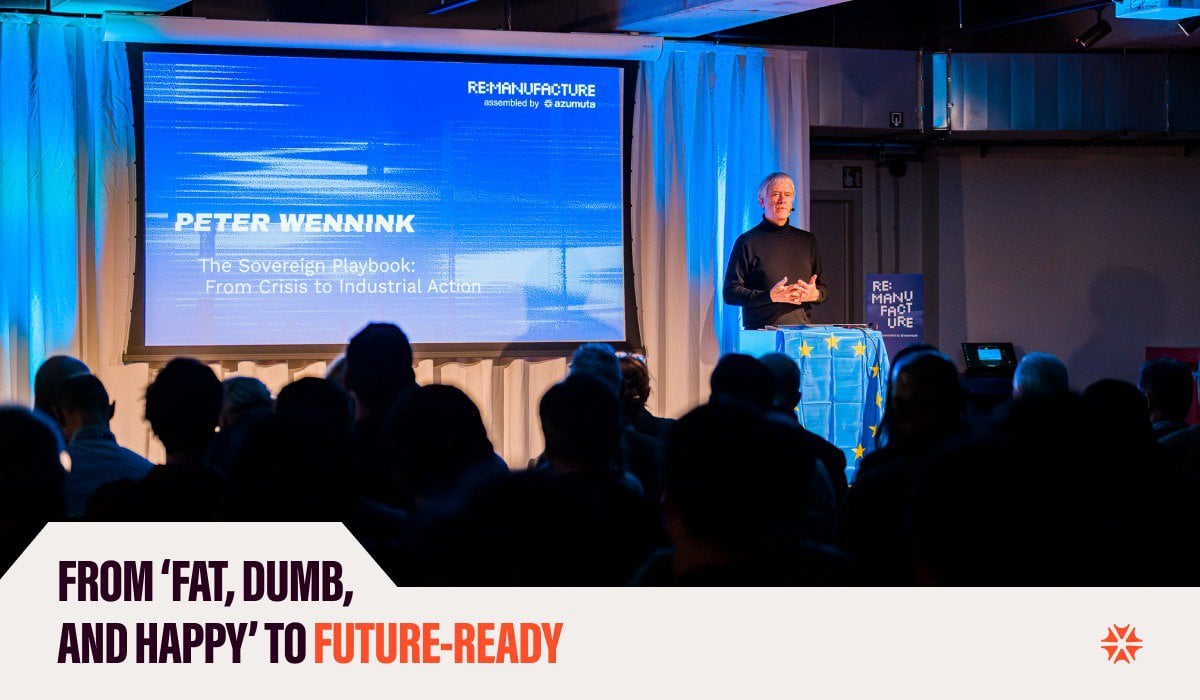
Peter Wennink’s keynote fits that mission because it refuses to separate policy ambition from operational reality.
“Relevance” is not something you declare. It is something you build. And in manufacturing, you build it through execution. Clear standards, fast learning, reliable proof, and continuous improvement.
If you want to go deeper into the broader work behind the Sovereign Playbook, you can explore Peter Wennink’s report site here: rapportwennink.nl