
Azumuta's first
robotics
field note.
A robot should get a work instruction the same way a person does. This bench asks if the motion finishes the job.
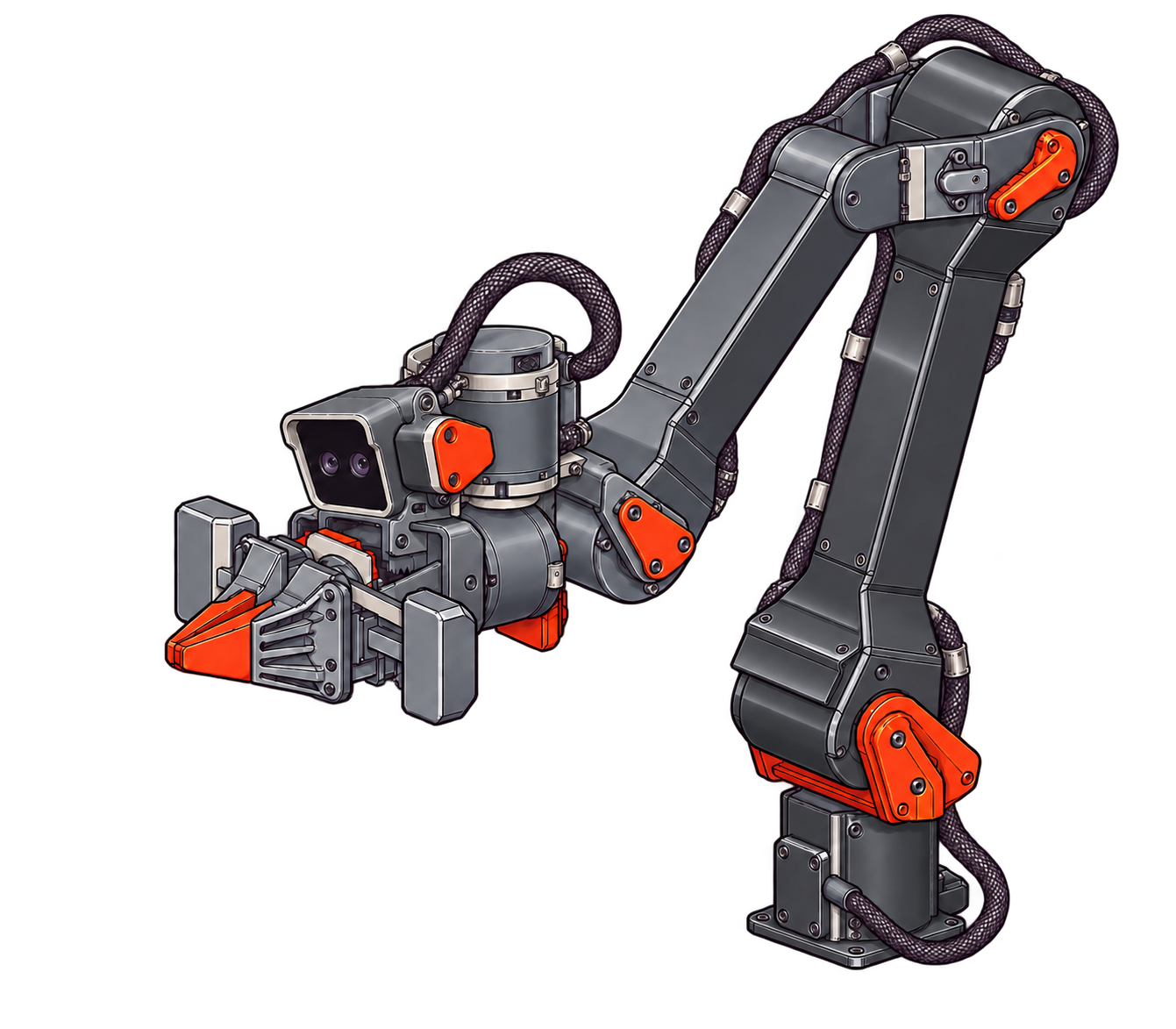
A Trossen research arm,
on a bench.
TL;DR
The questions driving this experiment.
What work is worth teaching a robot?
A repeated step, and a result a person can accept or reject.
How do we capture the way it gets done?
Film the motion, then check the result.
What closed the job?
The arm finished moving. The job was still open.
Why we are doing this
A human on the line gets an instruction: do this step, then check the result. Azumuta wants a robot to get the same kind of instruction.
In this Azumuta Labs experiment, we’re testing the check. When the arm finishes moving, is the job finished? Skip to the video below for the test results.
Changing what a robot does today usually means programming it again. An instruction is quicker to change. We want the same arm, or a humanoid at a person’s station, to take a different step without a new program. The record should still say who did the step and what came of it. This run is the first part of that record: the motion, then the check.
This experiment uses a Trossen WidowX, a research arm on a bench.
Work worth teaching
The final step has to be one a person can accept or reject, otherwise there is nothing to check when the robot stops.
So what’s worth teaching a robot or a humanoid is repeatable steps, in a fixed place. Placing a part or taking a measurement is one, scanning a code is another. But if the step needs a judgement call, it stays with the operator.
In the test on our bench, the step was for the robot to handle one machined component. So we filmed what the arm does. An operator then checks the result in the work instruction and chooses: go again, hand the step to a person, or stop.
Watching the motion is not enough to know the part is right. That is what the check is for. The video below is that sequence.
The bench
We put a Trossen WidowX on a bench, and it handled one machined component while two cameras filmed the handling. An operator then opened an Azumuta work instruction and checked the component.
That is the test: the handling from two angles, then the check in Azumuta. Same bench, same part, same arm. The work instruction in the film is the operator’s check.
What we learned
The arm finished moving. The job was still open. The operator’s check in the work instruction is what closed it.
We only know that for this part, on this fixture, with this arm. Change one of those and we start again.
Next we will pick one task, on one station, with a result we can point at. We will write down what worked, where a person had to step in, and what broke when the setup changed.
Have a task worth testing? Talk to Azumuta Labs.
Prompt-driven work instruction building
Research
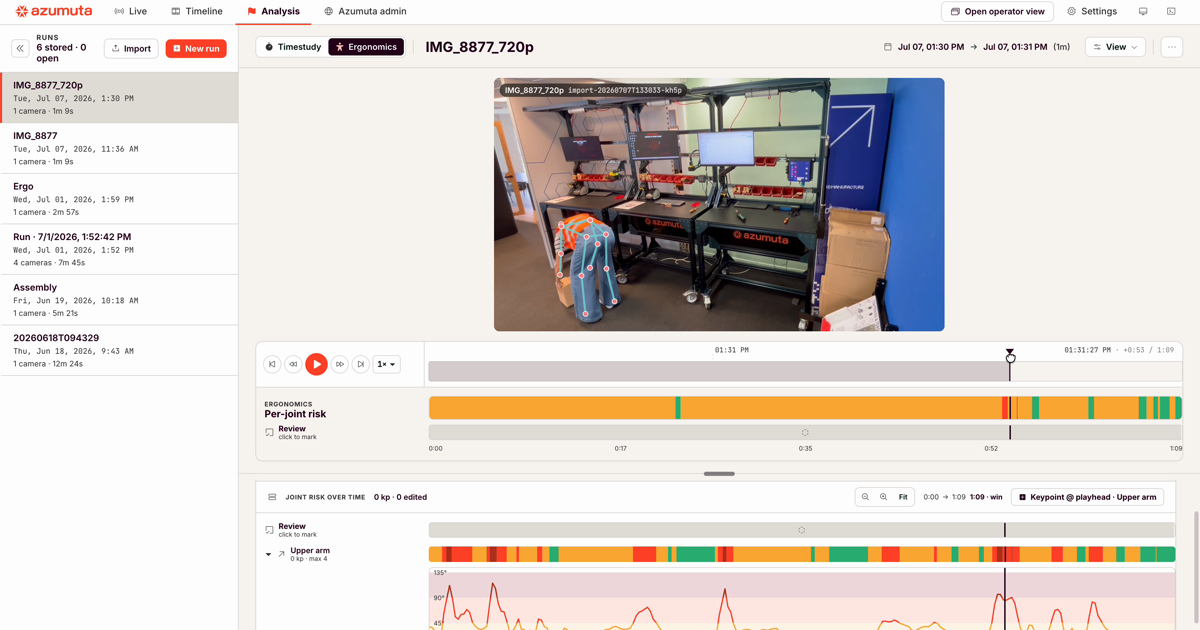
Reading ergonomic risk straight from shopfloor video
Research
Acceleration and accuracy of manufacturing process capture with the use of VLMs
Research
Bring us your
hardest station.
Bring a process, a document, or a station that resists every demo. We'll study it in the open, with you.
Collaborate with us ↗