
Teaching a robot to use a torque wrench
Kurz erklärt
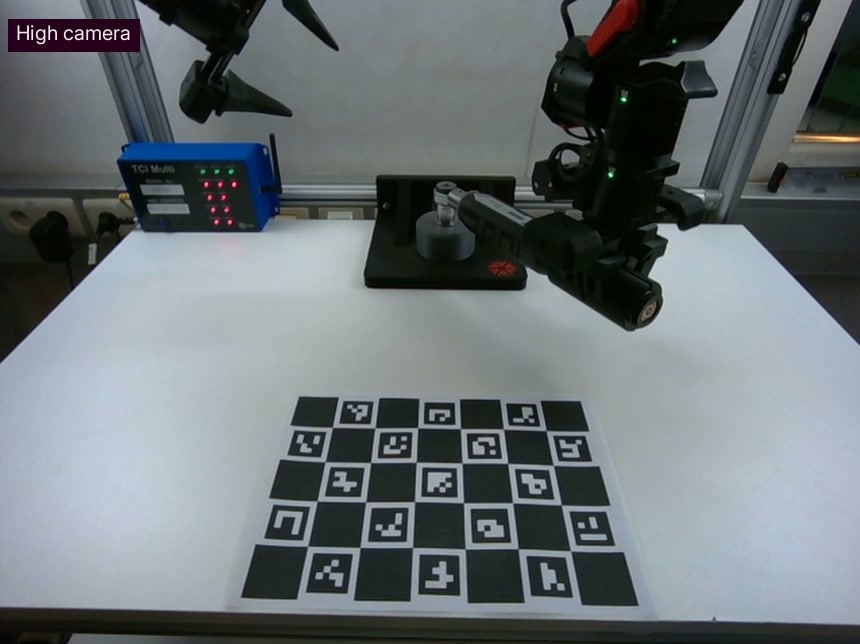
How does a robot know a bolt is tight? On our test bench, a camera helps a Trossen arm seat the socket. The torque wrench tells it when to stop.
Why a torque wrench
An operator tightening a bolt feels the socket drop over the hex and knows when to stop pulling. A robot holding the same wrench has to work out both.
In our first robotics experiment, a Trossen arm handled a component and an operator checked the result. This time we gave the arm a tool operators already use, and a job with a clear finish.
How the robot tightens the bolt
The robot brings the socket of the torque wrench over an M10 bolt. Then comes the tricky part, which you can see in the close-up.
The hex of the bolt and the hex inside the socket almost never line up at first. The socket then rests on top of the bolt, even though it looks centred. This was the hardest problem to solve. The arm now presses down gently and turns the socket in small steps until it drops over the hex. A camera confirms that it is fully seated. It does not matter how the bolt or the socket was turned at the start.
Next, the arm swings the handle, ratchets back and pulls again. It knows when to stop the same way an operator does: it looks at the wrench. A band of light on the tool turns green once the torque is in the required range, here between 9 and 11 N·m. The robot watches that band through its camera and stops as soon as it turns green. In the run you see here, the final reading was 9.24 N·m.
What comes next
On this bench the tightening is now repeatable. The wrench turned green six runs in a row, including the one in the film.
A person still prepares the job: they insert the bolt, start it by hand and give the robot the wrench. For a full end-to-end sequence, the robot will do that too. It will pick up the torque wrench itself, insert the bolt and turn it finger-tight before it tightens to torque.
That is what we are building towards. A team should be able to give a person or a robot the same work instruction, ask for the same torque check and review the result. This trial covers the final step, with a reading from a tool the team already trusts.
Mehr aus dem Labor
Alle Publikationen →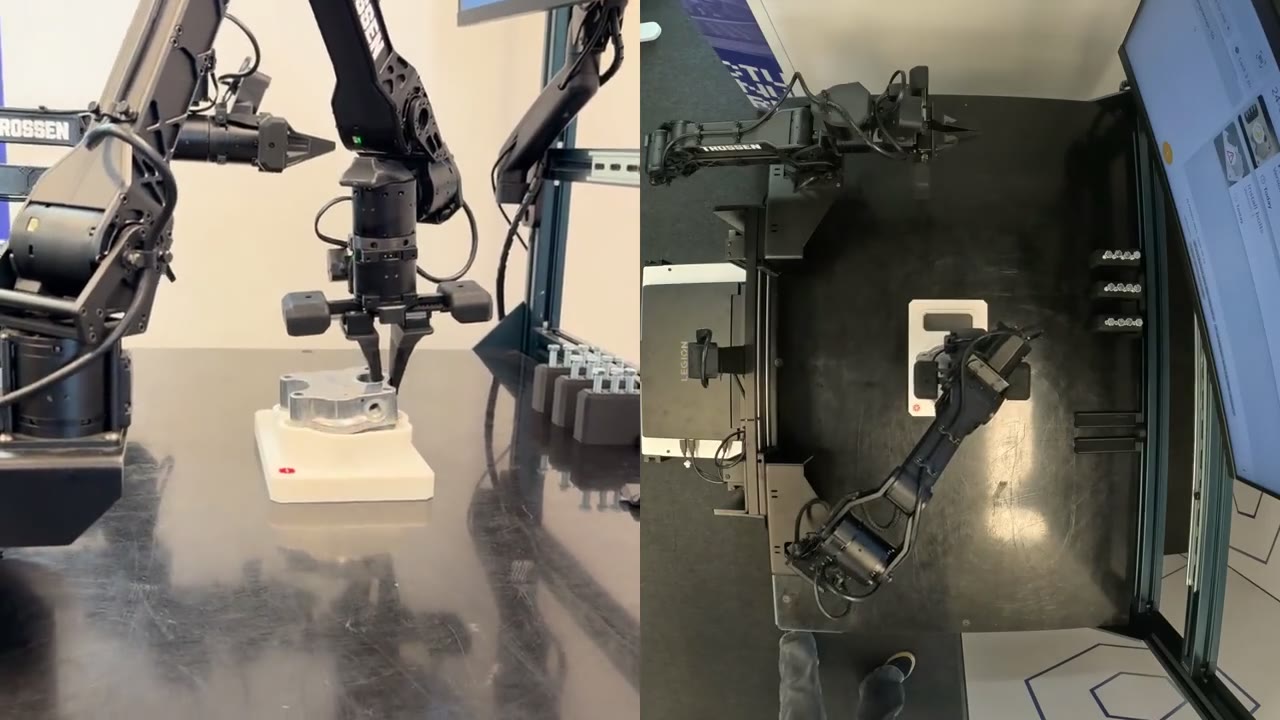
Azumuta's first robotics field note
A Trossen WidowX handled one component on the bench. An operator checked the result in Azumuta. When is the job finished?
Research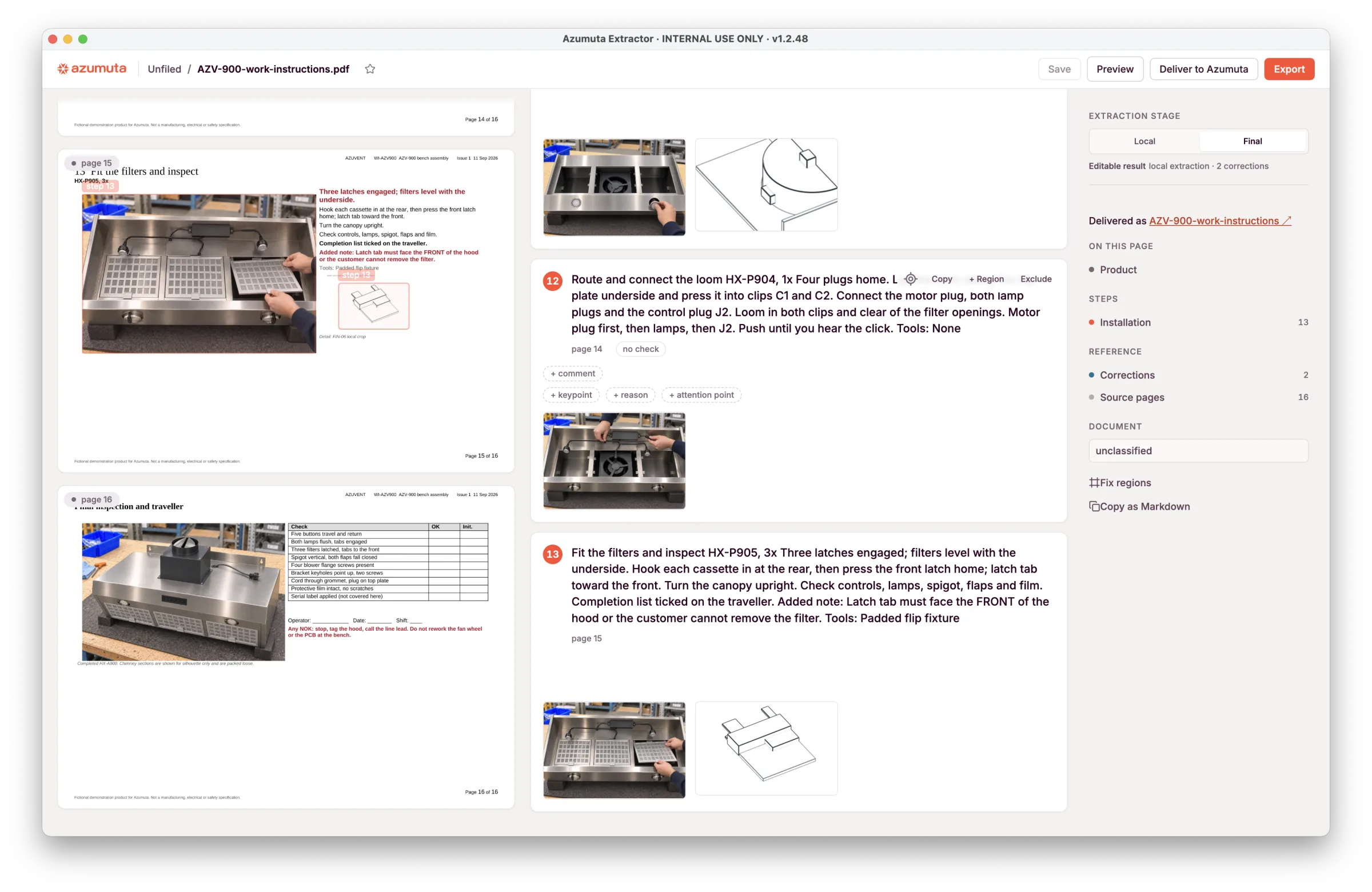
From static documents to reviewable work instructions
Azumuta's Document Extractor converts existing manufacturing documents into structured work instructions, with local and AI-assisted processing options.
Research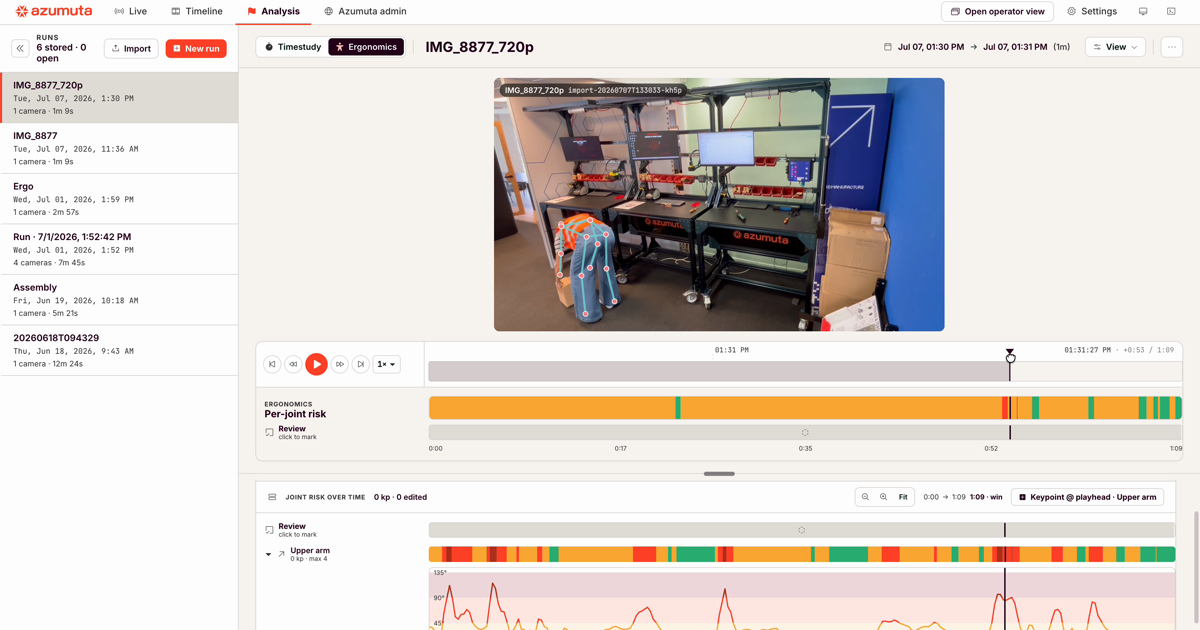
Ergonomisches Risiko direkt aus Werkshallenvideo ableiten
Dieselbe Werkshallenaufnahme, die unsere Erfassung von Arbeitsanweisungen antreibt, enthält auch die Haltung des Bedieners. So machen wir daraus metrische 3D-Pose und belastbare ergonomische Risikowerte, on-premise.
ForschungBringen Sie eine konkrete Herausforderung mit.
Ein Prozess, Dokument oder Arbeitsplatz, den wir genauer untersuchen sollten. Testen wir gemeinsam eine klare Frage und lernen aus dem Ergebnis.
Mit uns zusammenarbeiten ↗