Een dark factory (ook lights-out manufacturing genoemd) belooft een fabriek die draait zonder mensen op de vloer: robots die de nacht doorwerken, lichten uit, productie ononderbroken. Het is een van de meest besproken en meest misverstane ideeën in manufacturing.
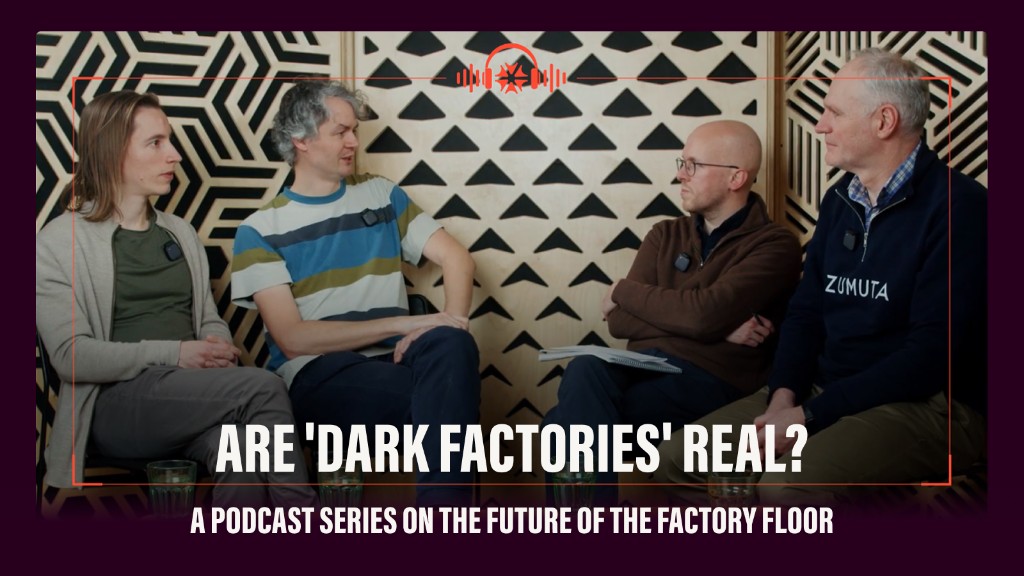
Bestaan dark factories echt? Ja, maar alleen voor een smalle slice van high-volume, low-variation productie. Voor de meeste plants is het realistische pad geen volledige autonomie maar een grey factory: gedeeltelijke automatisering waarbij mensen en robots het werk delen. Dat is de vraag die we voorleggen aan drie heel verschillende perspectieven in Shop Floor Stories: Dark Factories, een nieuwe driedelige podcastreeks (de afleveringen zelf zijn in het Engels):
- De wetenschappers die de robots écht bouwen,
- Een founder die automatisering schaalt in echte fabrieken,
- Een vakbondsleider die de mensen op de vloer vertegenwoordigt.
Het doel is geen lights-out utopia te verkopen, maar te scheiden wat echt is van wat hype is, en te begrijpen wat er écht nodig is om goed te automatiseren.
Aflevering 1: de wetenschap, met UGent-professoren Francis Wyffels en Andreas Verleysen
Om de reeks te openen, herkaderen UGent Robotics and AI-professoren Francis Wyffels en Andreas Verleysen de term "Dark Factory" zelf. "Dark doesn't need to be dark," legt Wyffels uit. "It can also be about improving existing lines, while people can still be around working together with these robots." Hun researchfocus is verschoven van high-volume, low-variety productie naar de high-mix, low-volume realiteit waarin de robot zich moet aanpassen aan de taak, en niet andersom.
"We are highly overestimating what humanoid robots are currently capable of doing."
Andreas Verleysen
Over de humanoid-hype zijn beide professoren bot. Verleysen merkt op dat virale demo's vaak misleiden: "If you look closer at these commercials, you can see that this robot is often being operated from a distance by a human." Language models hadden het hele internet om van te leren. Robots niet. Daarom blijven mensen in the loop. Verleysen voegt toe: "Our hands are magical. So we will need this human in the loop to collaborate with."
"If we take the current tech and just keep on doing what we're doing now, then I would say we don't have general purpose robots in the first 100 years."
Andreas Verleysen
De takeaway voor fabrikanten is praktisch, niet pessimistisch. Volledige autonomie is zeldzaam en veraf. Gedeeltelijke automatisering, waarbij mensen en robots het werk delen, is het realistische en volwassen pad.
Gezien of robots nog instructies nodig hebben, aarzelde Wyffels niet: "They need working instructions. They also need a way to understand these working instructions. And then they also need training data to learn how to do the task." Instructies verdwijnen niet wanneer robots arriveren. Ze worden de gedeelde basis waarop zowel mensen als machines draaien, en iemand moet nog altijd vastleggen hoe het werk gebeurt en het gestandaardiseerd houden. Dat is precies de laag die Azumuta bouwt.
Aflevering 2: automatisering schalen, met Jonathan Berte (Robovision)
Vervolgens gaan we van het lab naar de fabriek. Jonathan Berte, oprichter van Robovision, zet al jaren vision AI in op echte productielijnen.
Aflevering 2 gaat in op waarom high-mix, low-volume "dark" factories nu technisch mogelijk zijn, waarom de meeste fabrieken "grey" blijven in plaats van volledig dark te gaan, en waarom gedeeltelijke automatisering vaak de slimme engineeringkeuze is, geen compromis. Waar aflevering 1 de wetenschap dekt, brengt Berte de hands-on realiteit: hoe automatisering schalen eruitziet als producten blijven variëren.
Aflevering 3: de menselijke kant, met Stijn Gryp (ACV)
Tot slot de mensen. Stijn Gryp, nationaal secretaris bij de vakbond ACV en sociaal wetenschapper, brengt het perspectief dat het techgesprek vaak overslaat: wat automatisering doet met jobs, skills en "werkbaar werk."
Aflevering 3 behandelt upskilling, sociaal overleg en het robot-tax-debat. Gryp is geen moderne luddiet: hij wil dat machines saai, vuil en gevaarlijk werk overnemen, en dat opleiding en lonen meegroeien. Mens-robot-samenwerking is volgens hem een sociaal en organisatorisch probleem, niet alleen een technisch. Betrek werknemers van bij het begin, gebruik hun tacit knowledge, en behandel sociale innovatie als deel van het project.
Luister nu
De podcast zelf is in het Engels. Aflevering 1 met Francis Wyffels en Andreas Verleysen staat live op YouTube, Spotify en Apple Podcasts, of luister op azumuta.com.
Aflevering 2 met Jonathan Berte staat live op YouTube, Spotify en Apple Podcasts, of luister op azumuta.com.
Aflevering 3 met Stijn Gryp staat live op YouTube, Spotify en Apple Podcasts, of luister op azumuta.com.
Veelgestelde vragen
Quick FAQs to get you up to speed
Een dark factory, ook lights-out factory genoemd, is een fabriek die productie draait zonder mensen op de vloer. Omdat niemand iets hoeft te zien, kan ze in principe in het donker werken. Ze past bij smalle, repetitieve, high-volume taken met stabiele inputs.
Ja, maar ze zijn zeldzaam. Zoals UGent-roboticaprofessor Francis Wyffels opmerkt, "dark doesn't need to be dark," en mensen werken vaak nog naast de robots. Volledig autonome lights-out plants bestaan alleen voor een smalle slice van high-volume, low-variation productie.
Een dark factory draait zonder mensen aanwezig. Een "grey" factory gebruikt gedeeltelijke automatisering, waarbij robots en mensen samenwerken. Robots nemen voorspelbare, high-precision taken, en mensen handelen oordeel, flexibiliteit en uitzonderingen af. Grey is de volwassen keuze voor de meeste plants.
Een grey factory gebruikt gedeeltelijke automatisering: robots en mensen werken naast elkaar op dezelfde productielijnen. Robots nemen repetitieve, high-precision taken; mensen handelen uitzonderingen, oordeel en dexterous werk af. De meeste fabrikanten vandaag draaien in grey mode in plaats van volledig lights-out.
Niet snel. UGent-onderzoekers schatten een echte general-purpose robot op minstens een decennium, en bij huidige datasnelheden mogelijk veel langer. Voorlopig nemen robots repetitieve taken over terwijl mensen in the loop blijven voor dexterous en judgement-based werk.
Digitaliseer en standaardiseer menselijk werk eerst, en begin nu operationele data vast te leggen. Robots schalen een proces; ze herstellen er geen. Maak werk consistent en zichtbaar vóór je automatiseert, en houd mensen in control over de rest.